
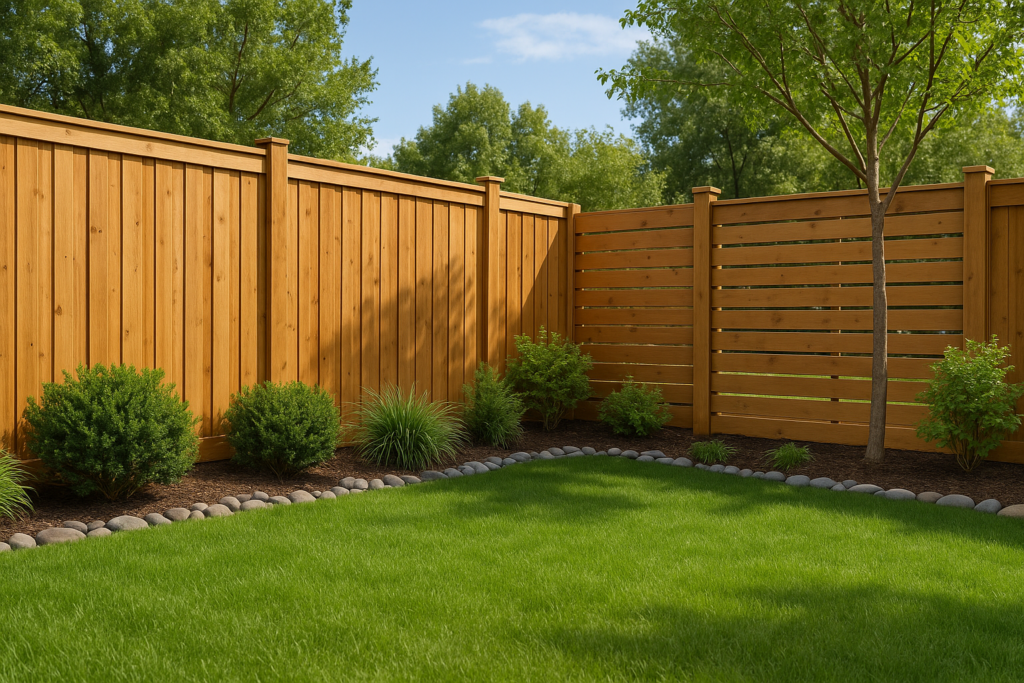
A board-on-board privacy fence overlaps each picket by roughly an inch, which closes the gaps that open up as boards dry and shrink. That single detail is why so many homeowners planning a wooden fence installation end up paying a little more for this style instead of standard stockade. If the goal is a yard nobody can see into three summers from now, overlap beats a flush butt joint every time.
At Richboro Fence, most privacy projects start with the same conversation: how much seclusion, how much noise relief, and how much maintenance the homeowner actually wants to take on. The style you pick answers all three at once.
What Board-on-Board Fencing Does Differently
Standard privacy panels set pickets edge to edge. Green or kiln-dried lumber loses moisture after installation, and a 5.5-inch picket can shrink an eighth to a quarter inch across its face, leaving visible daylight lines along the whole run.
Board-on-board solves that by mounting a second layer of pickets over the seams, typically with a 1-inch to 1.5-inch overlap. You use roughly 30 to 40 percent more wood, which is the main reason the price climbs, but the fence stays opaque permanently and reads as substantial from the street.
- Board-on-board: full privacy that survives shrinkage, finished appearance on the outside face, higher material cost.
- Shadowbox: alternating pickets on both sides of the rail, identical from either yard, allows airflow but gives partial sightlines at an angle.
- Stockade: flush pickets, lowest cost per foot, the style most likely to show gaps after one dry season.
- Tongue-and-groove: milled boards that interlock into a solid wall, excellent for wind and sound, the most expensive of the four.
Choosing Wood That Survives Twenty Winters
Species matters more than any stain you apply later. Western red cedar and redwood contain natural extractives that resist decay, while pressure-treated southern yellow pine relies on chemical preservatives driven into the sapwood. The USDA Forest Products Laboratory ranks cedar heartwood as resistant to decay, which is why it holds its shape well in a vertical privacy application.
Pressure-treated pine runs about 20 to 30 percent cheaper and handles ground contact better, though it tends to cup and twist unless it is allowed to dry before staining. Many of our customers split the difference: treated posts and rails for structure, cedar pickets for appearance and stability.
Grade and Moisture Content
Ask what grade you are getting. Select-grade cedar has few knots and stays straighter; construction-grade costs less and accepts a solid-body stain well. Lumber delivered soaking wet should sit stickered on site for several days before anyone builds with it, a step rushed crews skip.
Post Depth and Concrete Decide Everything
The structural rule is simple: set fence posts at least one-third of their above-ground height, and always below the local frost line. A 6-foot privacy fence usually means 9-foot posts buried 36 inches, with a 10-inch to 12-inch diameter hole.
Concrete is the standard for privacy fencing because the sail area of a solid panel multiplies wind load on every post. We crown the concrete above grade so water sheds away from the wood, then backfill with 4 to 6 inches of gravel at the base for drainage. Skipping that gravel is the most common reason a post rots at the collar within eight years, and it is the same failure behind most leaning sections people later try to fix. Our walkthrough on how to repair a privacy fence covers what that repair involves.
Custom Details That Turn a Fence Into a Sanctuary
Privacy is the baseline. The design choices that follow are what make a backyard feel finished rather than walled in.
- Height: 6 feet is standard, 8 feet is available where zoning allows and makes a real difference on sloped lots overlooked by neighbors.
- Top treatment: a horizontal cap rail protects end grain, sheds water, and adds visual weight for about $4 to $8 per linear foot.
- Lattice or spindle toppers: 12 to 18 inches of open detail above a solid base lets light through without opening sightlines at eye level.
- Post caps: copper or cedar pyramid caps slow end-grain rot, the single most vulnerable spot on any post.
- Gates: specify 4-foot walk gates and 10-foot to 12-foot double drive gates, with heavy-duty strap hinges and a diagonal brace or steel frame.
Racked panels follow grade on a slope and keep the bottom gap consistent, which matters enormously for anyone containing a dog. Stepped panels look more traditional but leave triangular gaps that small breeds will find within a week.
How Much Noise a Solid Wood Fence Actually Blocks
A privacy fence helps with road and neighbor noise, but expectations should stay realistic. Barriers work by mass and by blocking line of sight, and the Federal Highway Administration notes that effective sound barriers need to be continuous and tall enough to break the sight line between the source and the listener.
In practice, a tongue-and-groove or board-on-board fence with no gaps at the bottom can cut perceived noise noticeably, often in the range of 5 to 10 decibels. Shadowbox and spaced styles let sound through along with the air, so they are a poor pick if traffic noise is the main complaint.
Budgeting Your Wood Fence Installation
Installed pricing for a 6-foot wood privacy fence generally lands between $30 and $55 per linear foot, with board-on-board cedar near the top of that band and treated pine stockade near the bottom. Site conditions move the number: rocky soil, heavy slope, tree root removal, or hauling material through a narrow side yard all add labor hours.
Gates are priced separately, usually $350 to $1,200 each depending on width and hardware. Old fence demolition and disposal typically runs $4 to $10 per foot. Homeowners comparing long-term spend should also read about how much upkeep a chain link fence requires, since wood costs more up front but delivers privacy chain link never will.
Where the DIY Approach Stops Making Sense
Plenty of capable homeowners can build a short, level run with prefab panels. A step-by-step DIY project becomes a different animal once you add 200 feet, a 4-foot grade change, and 12 bags of concrete per weekend.
The three things that most often go wrong on an owner-built privacy fence are post holes that are too shallow, string lines that drift, and property line guesses that turn into a neighbor dispute. Pull your permit, call 811 before any digging, and verify your survey pins. Crews handling fence installation services in Doylestown deal with all three on nearly every job, which is where experience pays for itself.
Get Your Privacy Fence Design Started
Richboro Fence builds board-on-board, shadowbox, and custom-capped cedar privacy fencing. Contact us today for a measured quote with the style, species, and post spacing spelled out line by line.